As drone operations become more common in European cities, understanding their impact on people and the environment is essential. The MUSE project has taken a major step forward by developing a powerful toolset that helps cities, operators, and regulators assess and manage the real-world effects of Urban Air Mobility (UAM).
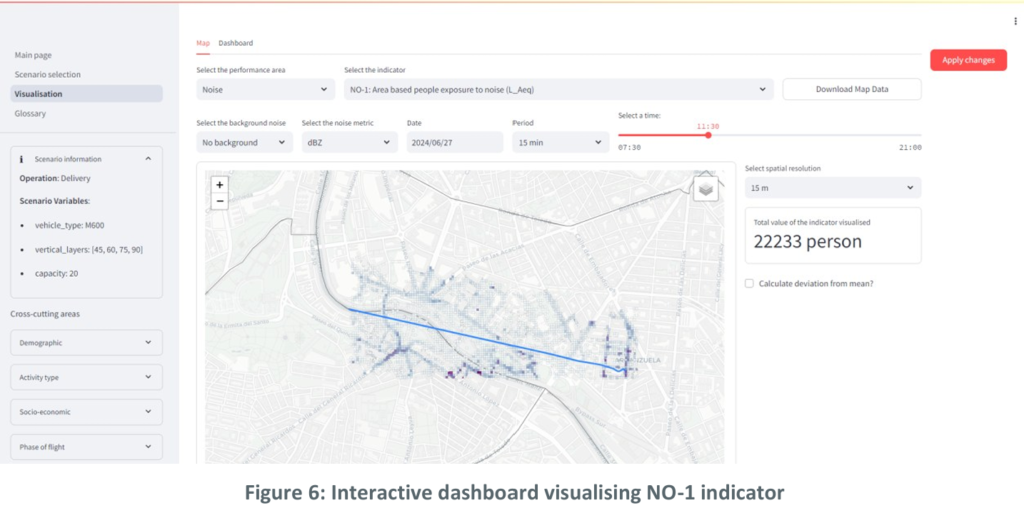
The MUSE project has released its U-space Environmental and Social Impact Assessment Toolset, an innovative digital platform designed to assess how drone operations affect the liveability and quality of life in urban environments.
Through this toolset, users can calculate new performance indicators across key impact areas such as noise exposure, visual pollution, privacy concerns, and access and equity, segmented by age, gender, income level, time of day, and land use type. These insights empower stakeholders (including drone operators, urban planners, local authorities, and regulators) to make better-informed decisions about how, when, and where drones should operate in cities.
“The MUSE toolset provides a much-needed evidence base to evaluate UAM operations not just by their technical feasibility, but by their social acceptability and environmental impact,” said the project team.
The toolset has been validated through real-life case studies in Madrid and stakeholder consultations with experts from aviation, urban planning, and public health. The dashboard is publicly available and ready to support further testing and uptake by cities and U-space actors.